5 Games Like Perceptle for Estimation and Timing Fans
Find your next game by the Perceptle round you like best, from a quick count or a disappearing ball to a beat you have to keep on your own.
Perceptle7 min read
If you’re looking for games like Perceptle, start with the round you wish lasted longer. Freehand is the closest match for Count and Track. Angledle makes a full puzzle out of reading angles, and Halfway turns fractions into cuts through paper shapes. For Tempo, try a rhythm test that takes away the clicks halfway through.
Which game should you try next?
Scroll the table for feedback and replay details.
| Round | Try this | What you control | Feedback | Can you replay? |
|---|---|---|---|---|
| Count | Freehand Counted | Enter a count from a brief scene. | See the count and how far over or under you went. | One attempt per daily set. |
| Track | Freehand Dropped | Drag a marker to the predicted landing spot. | See the full arc and how far short or long you went. | Replay the launch before locking in. One attempt per daily set. |
| Angle | Angledle | Enter an angle in degrees. | Get a higher or lower hint and see how close you came. | Six guesses per daily puzzle. Unlimited mode has fresh puzzles. |
| Tempo | A Real Me Rhythm Test | Tap with the guide, then continue from memory. | See a plot of early and late taps by stage. | Restart from the results screen. |
| Split | Halfway | Draw a straight cut through a shape. | See both area percentages and whether the cut met the target. | One run of ten cuts per day. |
If you like Perceptle’s five-round daily routine, Estimania offers five numerical questions a day, with partial credit for getting close.
We picked games you can start for free in a browser. The clips show puzzles recorded on November 24, 2026, including their answers.
Freehand for Count and Track
Counted starts with a glance
In Counted, you see a scene briefly, then enter a number after it disappears. Our estimate in the first round was 19% high. The reveal brought the ducks back and put the error next to the count, much like Perceptle’s dot reveal.
The next two rounds changed what we had to remember. For the popcorn, the useful thing to track was each pop. For the bus, we had to keep a running total as people got on and off. We overcounted, and the result called out the likely mistake: “You counted a few who got off.” Choose Counted if you like switching between a quick estimate and a running count. Play Freehand Counted
Read the Counted video transcript
Look once. Estimate how many ducks you saw. The popcorn round asks you to track each pop. On the bus, subtract the riders who get off.
Dropped lets you replay the launch
In Dropped, the ball vanishes in flight. Drag the marker to your predicted landing point and lock it in. Replay lets you see the same launch again before committing. The reveal draws the full path, and the distance in meters tells you which way your prediction missed. Our first marker was 4.4 meters short. The Breeze round was 0.1 meters long.
Read the target before dragging. The Jupiter round asks where the ball lands after two bounces. A standard Perceptle Track round asks where the ball first touches the ground. Choose Dropped if you want to see how wind, gravity, and bounces change the judgment. Play Freehand Dropped
Read the Dropped video transcript
The ball disappears. Mark where you expect it to land. The reveal shows which way you missed. On Jupiter, the target comes after two bounces.
Angledle for Angle
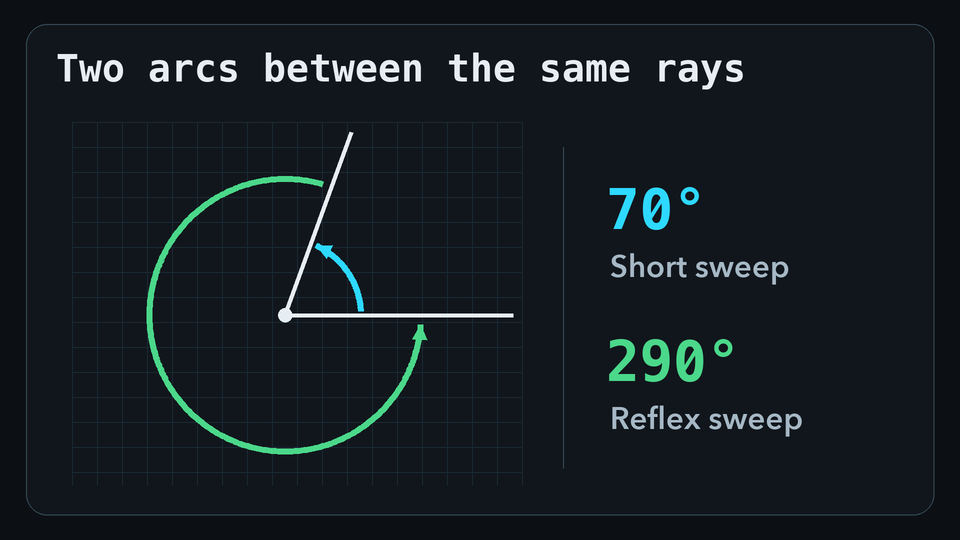
Angledle shows two rays and a marked arc. You get six guesses at the exact angle. Follow the marked arc before estimating. The smaller gap between the rays can help you find a reflex angle by subtracting it from a full 360-degree turn.
Our first estimate was three degrees low. Angledle said “So close!” and showed an up arrow, which gave us the direction we needed to solve it on the second guess. In Perceptle Angle, you start with a number, rotate a line to match it, and then see the error on that single attempt. Choose Angledle if you enjoy narrowing down an answer with feedback between guesses. Play Angledle
Read the Angledle video transcript
The arc marks the larger angle. A close guess can still be low. The arrow tells you which way to adjust.
Rhythm Test for Tempo
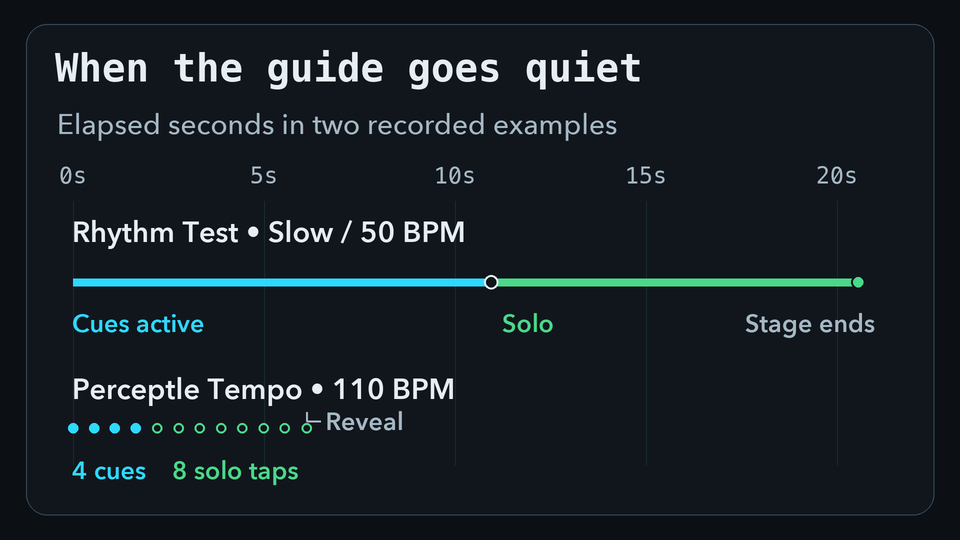
Start the Rhythm Test and tap along with the sound and on-screen markers. Halfway through each stage both cues disappear. Keep tapping at the same pace until the stage ends. The recorded test ran at 50, 60, and 120 beats per minute. In the slow stage, the average error was 42 milliseconds. The Early/Late plot shows where individual taps fell relative to the beat.
Perceptle Tempo uses four clicks to establish the beat and then measures eight taps through silence. Both games ask you to continue a pulse from memory. The Rhythm Test lets you compare that transition at three speeds in one session. Play the Rhythm Test or try the 12-tap Perceptle exercise.
Read the Rhythm Test video transcript
Follow the clicks. [Metronome clicks.] [Metronome clicks stop.] The result shows which taps were early or late.
Halfway for Split
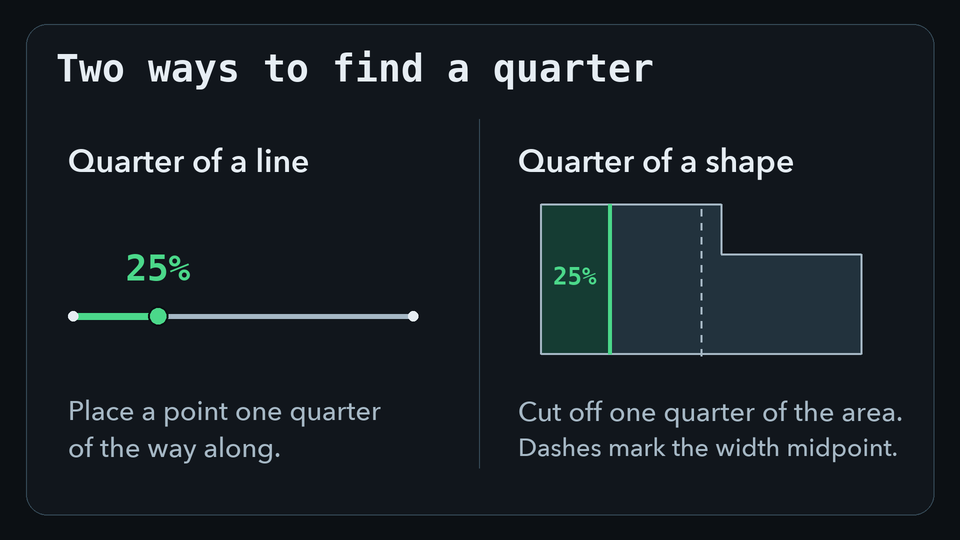
In Halfway, draw one straight cut through a shape to take off a half, a third, or a quarter of its area. Check the target before each cut. One of our cuts divided the shape almost evenly and still earned “WRONG SIZE” because the target was a quarter.
Perceptle Split measures along a line. In Halfway, a small shift in the cut can transfer a lot of area from one piece to the other if that part of the shape is wide. The reveal labels both pieces with their area percentages. Choose Halfway if you want to judge proportions in irregular shapes under a timer. Play Halfway
Read the Halfway video transcript
This round asks for a quarter of the area. A neat cut down the middle misses that target.
Estimania for the daily five-question routine
Estimania asks for five numerical estimates in one daily set. One recorded question asked how often households in a German study opened their fridge each day. We guessed 18, about 1.5 times the reference value of 11.9, and earned 82 points. The reveal cited Germany’s Federal Institute for Risk Assessment and the Max Rubner Institute and included a source link.
Perceptle gives you a stimulus to judge on screen or by ear. For Estimania you bring a reference of your own, such as the number of times you might open the fridge while making one meal, then scale it to a day. Choose it if you want the daily routine and enjoy finding a plausible starting point for an unfamiliar number. Play Estimania
Read the Estimania video transcript
Start with a number you can defend. The reveal gives your score, the reference number, and a source. Five estimates make up your daily score.
What makes a guess worth repeating?
When a game gives feedback changes what it asks of you. A direction hint between guesses turns a rough estimate into a puzzle you can narrow down. A reveal after you commit keeps the first judgment intact and gives you something to carry into the next round. A timing plot can tell you whether one tap went astray or whether the entire sequence drifted.
Perceptle gives you one judgment per round. In Track, use the landing markers to see whether you cut the arc short. In Tempo, compare successive taps to see whether they kept landing farther ahead of or behind the beat. Pick one of those changes and look for it in your next five-round set. Play Perceptle Unlimited